


Six shifts shaping
the future of festival
Brand Experiences

30 Octubre 2026
Summer Festival by Multilem
6 Shifts Shaping the Future of Festivals.
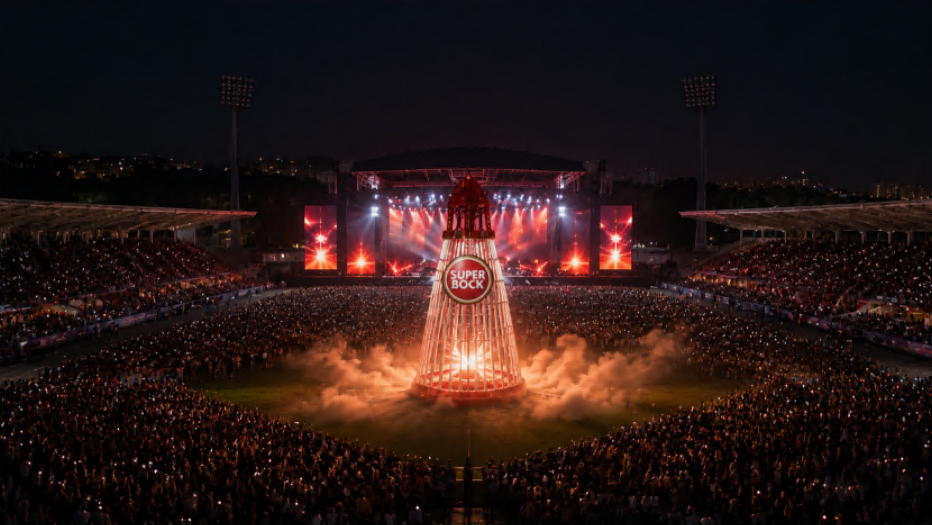
Festivals have become one of the most competitive environments for brands: bigger structures, more technology, more giveaways, more content, more opportunities to interact. But more does not necessarily create more meaning.
After observing dozens of brand activations across two of Portugal’s major summer festivals, one thing became clear: the experiences people remember are not always the biggest, loudest or most technologically advanced. They are built around a clear idea, a behaviour worth participating in and a story people want to be part of.
For brands, the challenge is no longer simply to attract attention, but to create an experience that earns participation, generates cultural relevance and carries the brand beyond its physical footprint.
At Multilem, we see six fundamental shifts shaping the future of festival brand experiences.
01. From activations to irresistible storyworlds
A collection of touchpoints is not an experience.
Many festival activations are still designed as a checklist of ingredients: a game, a photo moment, a product sample, a prize, a personalization station.
Individually, each element may work.
Together, they do not necessarily create meaning.
The strongest experiences are built from the opposite direction: they start with a central narrative idea and use every interaction as a chapter within that story.
This means shifting from activity design to narrative design.
The key questions are no longer:
What game should we build?
What gift should we give?
What technology should we use?
They become:
What world are people entering?
What role do they play in it?
What is the brand trying to achieve?
What story do we want to tell?
How does each interaction move the experience forward?
What is the emotional bond?
The shift
Stop designing isolated moments. Start building one connected narrative.
DON’T BUILD FIVE ACTIVATIONS. BUILD A WHOLE UNIVERSE WITH FIVE CHAPTERS.
02. From Audiences to Participants
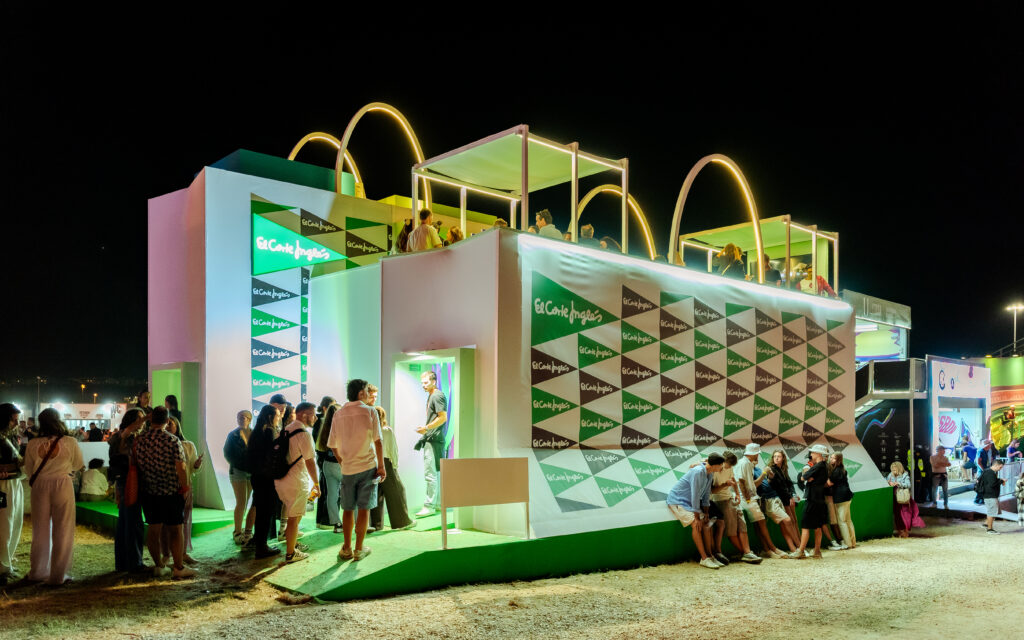
People don’t come to festivals to watch brands. They come to do things together.
Festivals are social by nature. People arrive with friends, react together, challenge each other, record each other and turn moments into stories.
That means the strongest brand experiences are rarely designed for one person alone.
They create something to join, something to watch and something to talk about.
A simple mechanic can become powerful when it creates competition, collaboration, anticipation or a shared moment.
Because once participation becomes visible, the experience starts to grow beyond the person taking part.
One person joins.
Friends watch.
Someone records.
Others react.
More people want in.
The shift
Brands should stop designing for individual interaction and start designing for social momentum.
The opportunity
Create experiences where participation itself becomes entertainment.
THE PARTICIPATION LOOP
WATCH → JOIN → PERFORM → REACT → SHARE → REPEAT
03. From giveaways to brand amplifiers
The best giveaways don’t end the experience. They extend it.
Festival merchandise has always been part of the equation. But not every giveaway creates value.
The question is no longer:
What can we give away?
It is:
What will people want to carry, wear or keep?The strongest rewards add value to the experience itself.
A good giveaway can do several jobs at once:
• It can be useful.
• It can become part of someone’s look.
• It can travel across the venue.
• It can create visibility, status or belonging.
At that point, it stops being merchandise. It becomes a brand amplifier. And when people carry it through the festival, it becomes media too.
The shift
Don’t think about giveaways as prizes. Think about them as experience amplifiers.
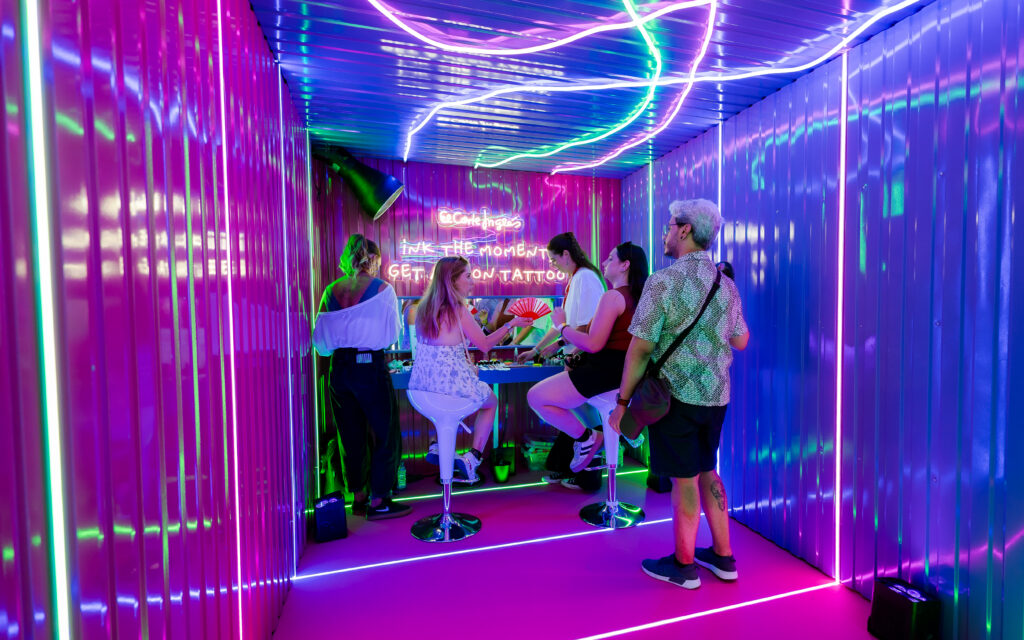
INK THE MOMENT. WEAR IT. CARRY IT. KEEP THE BRAND MOVING
04. From content capture to shareable moments
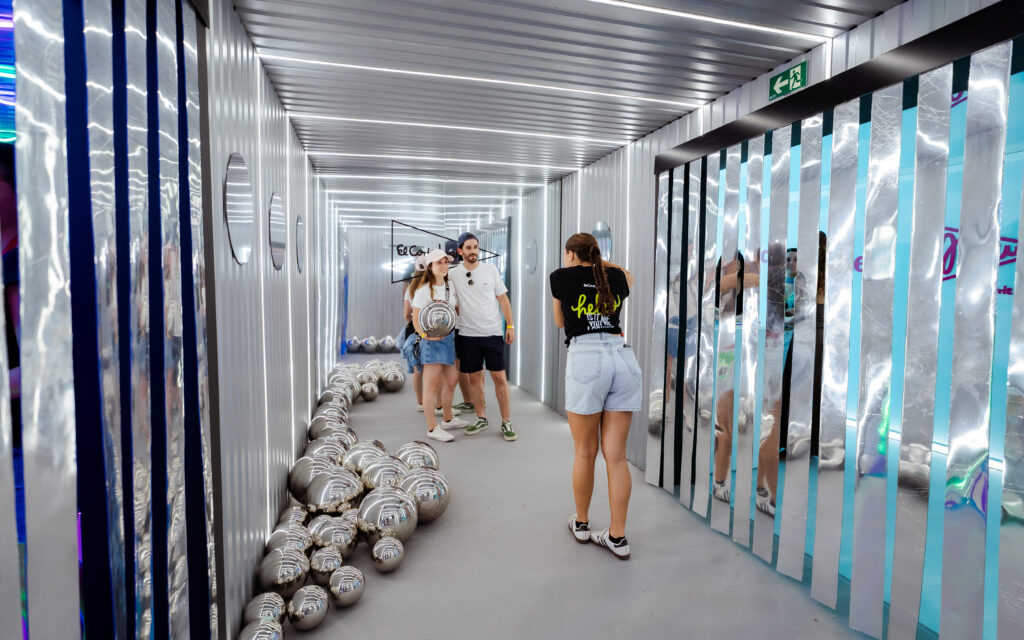
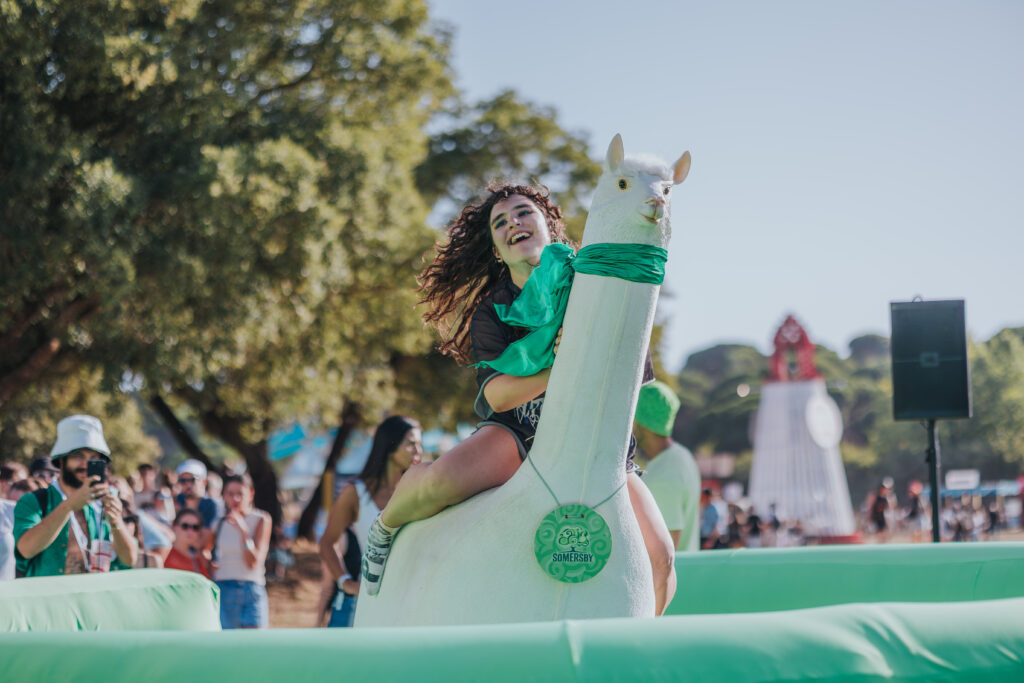
Don’t build content stations. Build moments people want to share.
Content is now part of almost every festival brief.
• Photo booths.
• 360 video.
• AI portraits.
• Mirrors.
• GIF stations.
These formats can still work. But on their own, they are no longer enough.
The question is no longer:
How do we create content?
It is:
How do we create something people instinctively want to capture?
The most shareable moments are built around reaction.
Surprise.
Transformation.
Skill.
Humour.
Tension.
Spectacle.
The shift
Stop designing content infrastructure. Start designing moments worth recording.
THE BEST CONTENT STARTS WITH A REAL REACTION.
05. Don’t collect contacts. Earn connection.
Festival lead generation is often transactional.
Scan.
Register.
Follow.
Subscribe.
Win.
It may generate numbers. But not necessarily relationships.
A contact collected in exchange for a reward can satisfy a metric without creating any real long-term value.
The strongest experiences do something different: they earn the right to continue the conversation.
That means putting value first.
Experience → Relevance → Value → Permission → Data
The question is no longer:
How many leads did we capture?
It becomes:
How many people wanted the relationship to continue?
Because better data does not come from asking for more. It comes from creating more value first.
The shift
Stop collecting data as the price of entry. Start earning permission through the experience.
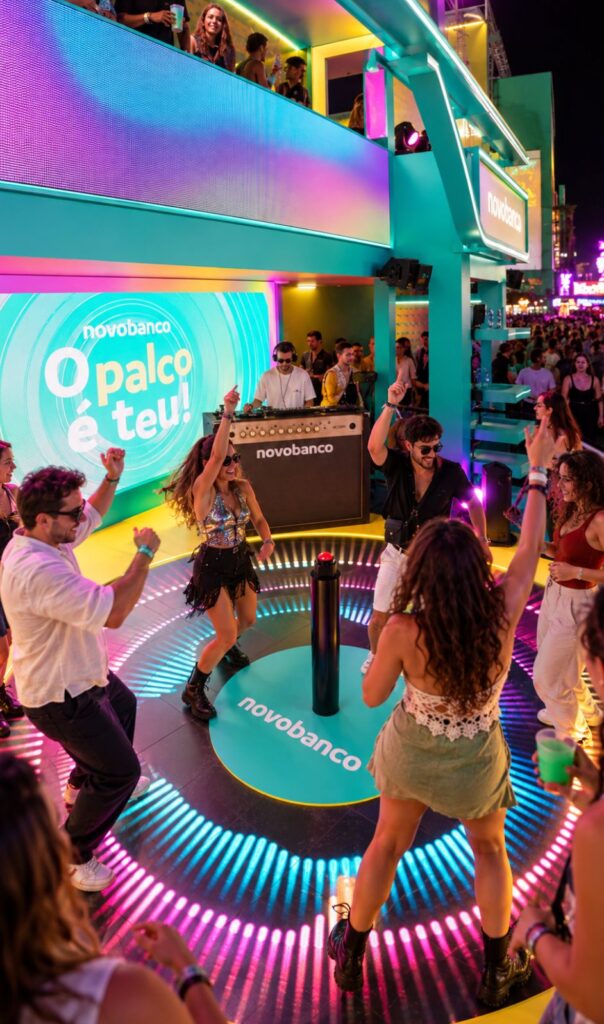
DATA SHOULD BE THE CONSEQUENCE OF ENGAGEMENT, NOT THE PRICE OF ENTRY.
06. The experience starts before people step in
A strong concept creates the world. A strong visitor journey gives it meaning.
Most brands design the experience from the entrance onwards.
But at festivals, people may spend 40 or 50 minutes waiting before they ever get there.
That waiting time is part of the brand experience too. And too often, it is treated as dead space.
A long queue with nothing happening can undo much of the excitement the activation is trying to create.
The strongest experiences think beyond the footprint. They design the whole journey.
The queue can already create value.
Build anticipation.
Introduce the story.
Offer utility.
Create interaction.
Give people something to watch.
Reward waiting.
Make the crowd part of the experience.
Because the journey does not begin at the entrance. It begins the moment someone decides: “I want to be part of that.”
The shift
Stop designing the stand. Start designing the entire experience.
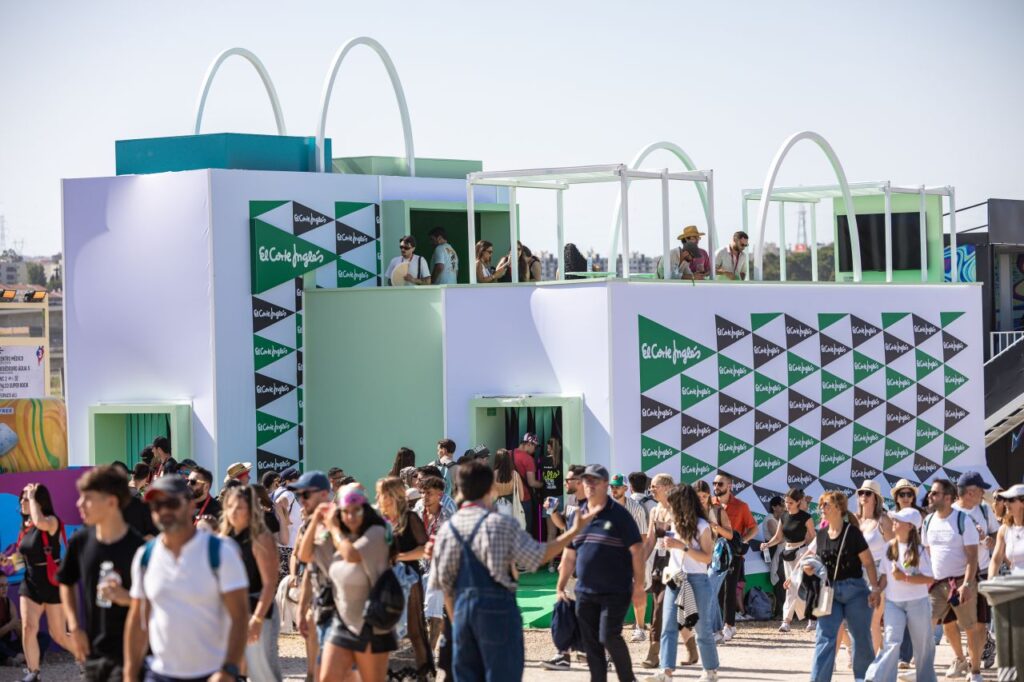
THE QUEUE IS PART OF THE EXPERIENCE.
One principle connects all six shifts: clarity beats complexity.
Simplicity is not the enemy of creativity.
Complexity is not the same as impact. More technology does not guarantee more relevance.
More touchpoints do not guarantee a stronger story. More prizes do not guarantee a stronger connection.
What matters is how clearly everything works together.
The strongest experiences are often built on a few simple principles:
• One clear idea.
• One intuitive behaviour.
• One meaningful payoff.
• One story people can understand instantly.
Because in crowded festival environments, clarity wins.
THE PRINCIPLE
Don’t add more. Make every element matter.
DON’T JUST GET SEEN. GET REMEMBERED.
DON’T JUST SHOW UP. GIVE PEOPLE SOMETHING TO JOIN.
Research & Methodology
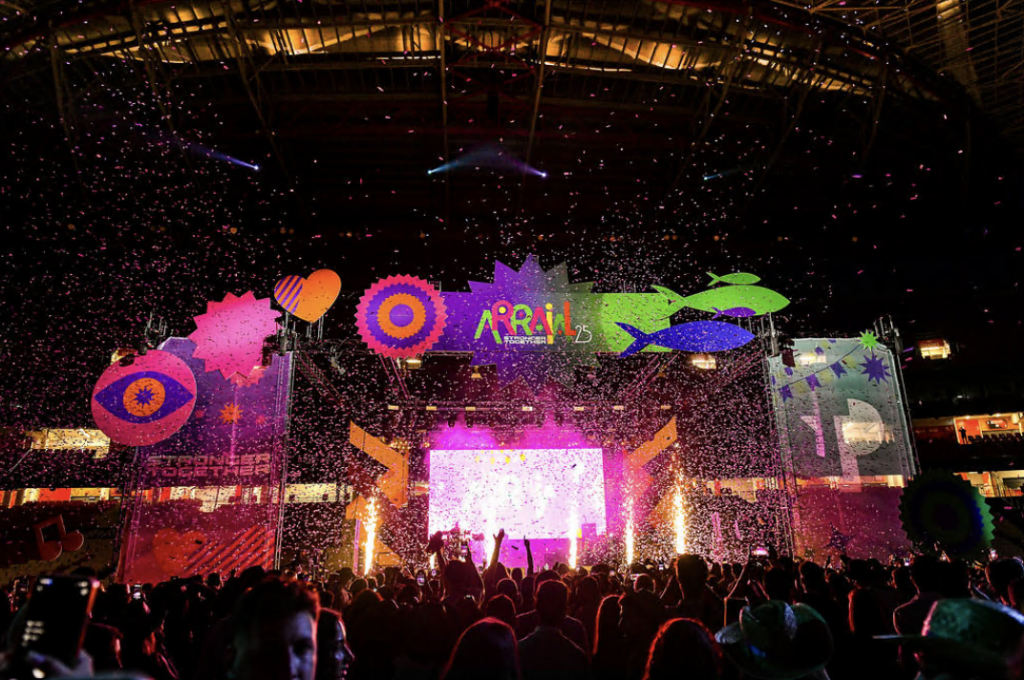
This perspective was developed from an observational review of brand activations across Rock in Rio Lisboa 2026 and NOS Alive 2026, conducted as part of Multilem’s ongoing analysis of experiential marketing formats, behaviours and emerging opportunities.
The review examined approximately 38 stands and brand activations, assessing four core dimensions:
Formats & Experiences — participation mechanics, visitor journeys, dwell time, queue dynamics and reward systems.
Concept & Creativity — strength of the central idea, narrative coherence and relationship between concept and execution.
Design & Branding — visibility, spatial design, brand expression and the ability of physical environments to attract and retain attention.
Trends & Opportunities — recurring behaviours, emerging patterns and opportunities for future festival experiences.
The original study explicitly framed these four areas as its analytical lens.
The research combined direct observation with participation in selected experiences.
Across the two festivals, the researcher spent approximately 16 hours in queues and activations, collected more than 40 branded items, subscribed to 12 newsletters, followed 8 Instagram accounts and generated more than 10 souvenir photographs.
A particularly relevant observation was that many experiences only reached their full potential when experienced with other people, reinforcing the importance of social participation in festival environments.
This article does not rank individual brands or agencies. Instead, it translates recurring observations into broader principles that can help brands design more meaningful festival experiences in the future.
About the Author
Ana Coelho
Senior 2D Creative
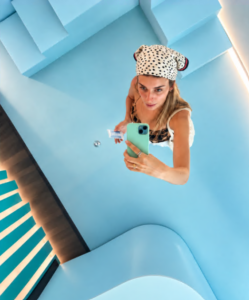
Ana Coelho is a visual storyteller with a sharp eye for turning strategy into ideas people can instantly understand, feel and remember.
With more than 10 years of experience across graphic design and visual communication, she develops creative solutions that strengthen brand identities and bring experiential projects to life across different formats, markets and touchpoints.
Known for her attention to detail, collaborative mindset and ability to simplify complex ideas without losing their impact, Ana plays a key role in translating Multilem’s creative vision into bold, clear and engaging visual narratives.
Field research by Ana Coelho.
Analysis, interpretation and report development by Multilem Marketing.


